
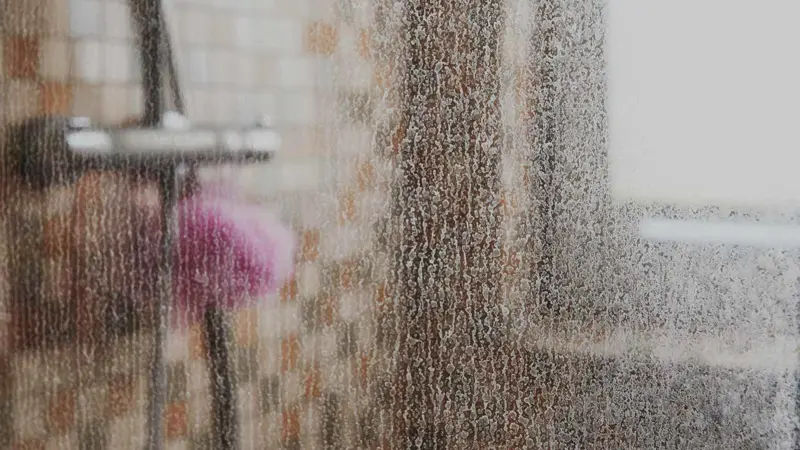
Are you tired of water stains on your glass shower doors that just won’t go away? Many homeowners struggle with cloudy glass and mineral deposits that slowly accumulate, affecting the shower’s appearance. Cleaning hard-water-stained glass shower doors starts by understanding that these marks are mineral deposits bonded to the glass, not just surface dirt.
If hard water stains remain even after careful cleaning, the glass may be permanently affected. VanGlaze can help by providing professional shower glass door replacement services with fast turnaround times and competitive pricing in Great Vancouver Area. To discuss your specific needs and get a free consultation, call (604) 906‑4455 now to take to the next step toward clear shower glass.
In the rest of this article on how to clean glass shower doors with hard water stains, we’ll explore the most effective and glass‑safe solutions step by step. We invite you to stay with us until the end to make the best decision for your shower glass.
The Connection Between Hard Water and Cloudy Shower Glass
Hard water is one of the most common causes of bathroom glass losing clarity over time. Water rich in minerals, such as calcium and magnesium, leaves behind tiny residues when it dries on the surface. Over time, these residues build up on glass shower doors and begin to scatter light rather than letting it pass through cleanly. That’s when clear glass begins to look cloudy or dull.
These marks may appear as water spots at first, but if unremoved, they mix with soap residue and form a tougher layer. This buildup affects the glass’s appearance and makes future cleaning more difficult.
The smoother and healthier the glass surface is, the less likely minerals are to stick permanently. That’s why understanding how hard water interacts with shower glass is the first step toward keeping it clear and maintaining its original appearance over time.
Best Way to clean glass shower doors with hard water stains
The best way to remove hard water stains is controlled, consistent care—not aggressive scrubbing. Minerals settle in microscopic irregularities, affecting clarity. Harsh products or heavy scrubbing may seem effective, but they can damage the surface and cause stains to return more quickly.
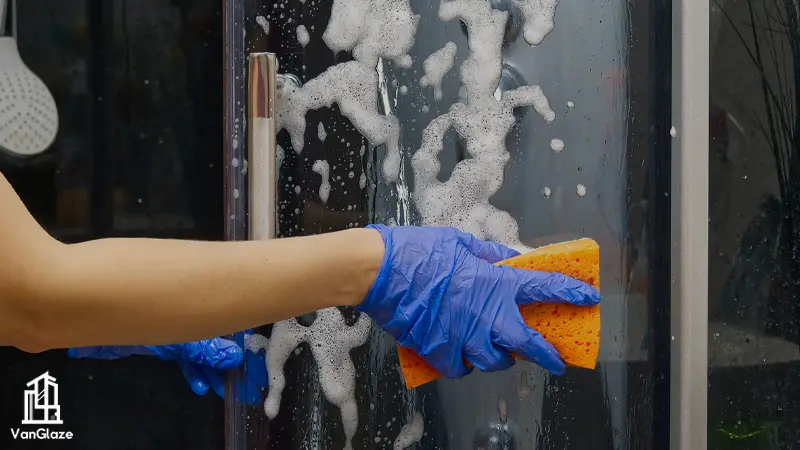
During service visits, homeowners often say they tried removing stains with heavy pressure or strong materials. Unfortunately, these methods cause more harm, leaving micro-scratches that make cleaning harder over time.
Professional environments take a different approach. Hotels rely on frequent, light cleaning to protect the glass’s smoothness rather than wear it down. If you’re curious about their exact routines and surface‑safe products, this guide explains in detail how hotels clean glass shower doors.
Safe cleaning methods focus on preserving the glass surface. A healthy surface allows water to sheet off more evenly, greatly reducing hard water stains.
How to clean glass shower doors with hard water stains and soap scum
Hard water stains and soap scum build up because minerals and soap stick to imperfections in the glass. Every time water dries, it leaves mineral deposits; soap bonds to those minerals, creating a stubborn layer.
The most common mistake people make is trying to scrub this layer away with force. Aggressive scrubbing, rough sponges, or abrasive cleaners don’t just remove residue; they wear down the glass itself. This creates tiny scratches that trap even more minerals and soap, making future stains appear faster and more difficult to clean.
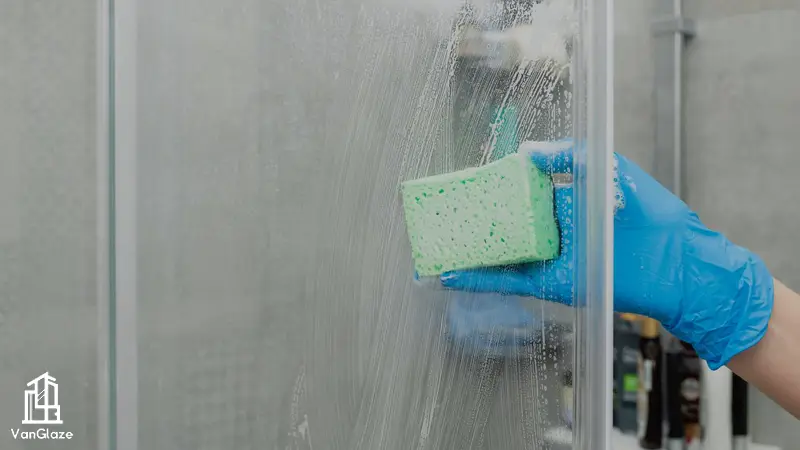
Effective cleaning works the opposite way. Instead of scraping buildup off, the goal is to loosen mineral bonds and gently lift residue from the surface. When done correctly, cleaning preserves the glass’s smoothness and maintains how light passes through it. This is why understanding how to clean shower glass without scratching it is essential for long-term clarity, not just short-term results.
A healthy glass surface lets water sheet off evenly, prevents spots, and makes soap and minerals easier to rinse away. This reduces stains and soap scum, keeping glass clearer and reducing the risk of permanent damage.
how to clean glass shower doors with hard water stains without vinegar
Cleaning hard water stains doesn’t always require strong acids or unconventional solutions. In many cases, avoiding vinegar is actually the safest way to preserve long‑term glass clarity. Neutral or low‑impact cleaning solutions, combined with the correct technique, reduce chemical stress on the glass surface and help prevent gradual damage over time.
The key is technique, not product. Use a microfiber cloth, apply minimal pressure, and move smoothly to lift residue without scratching. A thorough rinse prevents loosened minerals or cleaners from drying back onto the glass.
Many homeowners believe harsh methods are needed for stubborn stains. In reality, repeated gentle cleaning is far more effective. Healthy glass responds better to mild solutions, letting water rinse away residue before it rebinds.
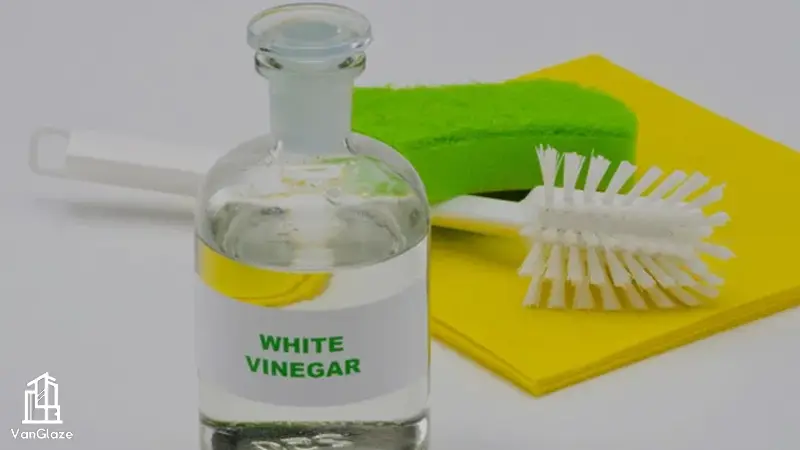
However, if the glass surface is already scratched or permanently etched, no cleaning method, vinegar or otherwise any other methods, will fully restore clarity. In these cases, replacing the glass may be the only long‑term solution. Depending on your space and layout, options such as sliding or swinging shower doors can provide a clean, easy-to-maintain surface in the future.
When Cloudy Glass Is No Longer Just Dirt: Understanding Stains vs. Etching
If haziness persists after gentle cleaning, the issue is likely glass etching, a permanent change caused by minerals.
Regular cleaning becomes ineffective at this stage. Continued scrubbing only creates micro-scratches that trap minerals and reduce clarity. Replacing glass is often the most practical long-term solution.
VanGlaze provides professional replacement for all types of shower glass, including Sliding Glass Shower Doors, Swinging Shower Doors, and modern Frameless Shower Doors designed for lasting clarity and easier maintenance.
To help you feel confident before making a decision, VanGlaze offers free consultations. Contact us today for a professional assessment to ensure you’re choosing the right solution—whether cleaning or replacement—that restores clarity to your shower glass.
Protective‑Coated Glass: Reducing Future Hard Water Stains
The most effective way to prevent hard water stains is to stop them before they start. Protective-coated glass applies an invisible layer that prevents minerals and soap from bonding to microscopic pores. When glass is sealed, water beads up and runs off easily, reducing the formation of hard water stains. The result is clearer glass, less buildup, and easier maintenance.
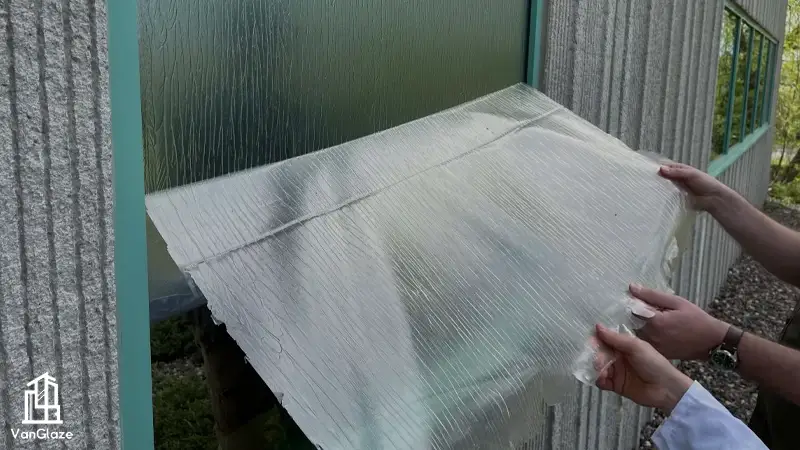
At VanGlaze, protective coating is applied before installation. The glass is ready from day one for bathroom conditions. If undamaged, the glass comes with a 10-year for clarity and performance.
This approach shifts focus to lasting solutions. Protective-coated glass keeps your shower clearer longer, with less maintenance and a preserved bathroom appearance.
VanGlaze’s Smart Approach to Cleaning and Replacing Shower Glass
Hard water stains on shower doors are a common frustration for many homeowners. Effective cleaning starts with understanding the difference between removable surface buildup and permanent glass damage. When stains are caused by mineral deposits and soap residue, gentle, surface‑safe methods combined with proper technique and regular care can restore clarity without harming the glass.
However, if stains remain even after careful cleaning, the problem is often etched or structurally damaged glass. In these cases, continued scrubbing or stronger cleaners usually make things worse, gradually dulling the surface and accelerating wear. Recognising when cleaning stops working is essential for protecting both the glass and your bathroom investment.
This is where professional solutions become the smarter long‑term choice. VanGlaze helps homeowners transform their bathrooms through expert shower glass door replacement. With experienced specialists, modern design options, and protective coated glass solutions, damaged or etched doors can be replaced with clear, durable, and visually refined alternatives. For a free consultation or to place an order, call (604) 906‑4455.
Throughout this article on how to clean glass shower doors with hard water stains, we explored practical, glass‑safe methods and explained when replacement is the better option. The cleaning methods discussed in this article are provided for educational purposes only. Applying any method is done at your own discretion.
If you have any questions or need clarification, feel free to leave a comment. Our specialists are happy to respond.
Frequently Asked Questions
1. Why does my shower glass still look cloudy, no matter how much I scrub?
This is often not a cleaning issue, but a sign of glass etching. If the surface no longer feels smooth and has a rough texture, hard water minerals have likely penetrated the glass’s microscopic pores, causing permanent damage. In this stage, standard cleaners won’t work. The best solution is to consult with VanGlaze to determine if professional restoration is possible or if replacement is necessary.
2. Is vinegar safe to use on all bathroom surfaces?
No. While vinegar is excellent for glass, its acidity can damage natural stone (such as marble or travertine) and certain metal hardware finishes. If your shower includes natural stone, always use a pH-neutral cleaner or take extreme care to prevent the vinegar solution from dripping onto stone surfaces.
3. How can I prevent hard water stains from coming back?
The best defence is daily prevention. Using a squeegee immediately after every shower can prevent up to 90% of spot formation. Additionally, upgrading to glass with a nano-protective coating (standard on many new VanGlaze doors) repels water, creating a self-cleaning effect that drastically reduces maintenance.
4. What is the difference between hard water stains and glass etching?
A hard water stain is a mineral deposit that sits onthe glass and can often be felt with your fingernail; it can usually be removed with the right cleaners. In contrast, etching is physical damage, microscopic scratches or corrosion inside the glass surface that causes a permanent cloudy appearance. If the “stain” cannot be removed and the glass always looks foggy, it has likely suffered permanent etching.
5. Is replacing the shower glass door more cost-effective than restoring it?
If the glass suffers from deep etching or permanent scratches, spending money on temporary polishes or harsh chemicals is usually not cost-effective and won’t fully resolve the issue. In such cases, replacement is a smart investment. VanGlaze can help by replacing old glass with modern, high-quality options (like Frameless or Sliding doors), ending the cleaning nightmare and increasing your property’s value with a fresh, pristine look.